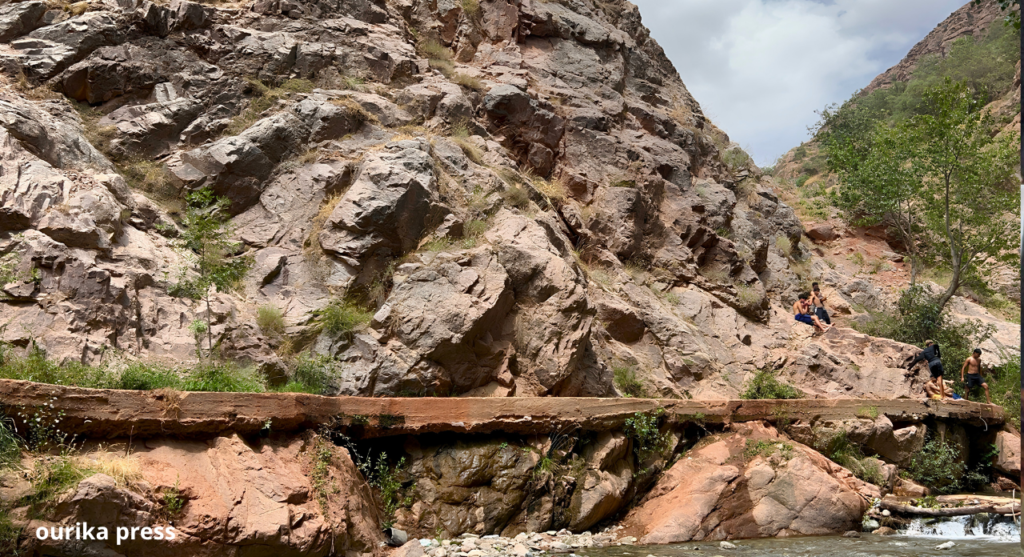
The Tribes of Ourika… The Mountain Memory That Shaped the Valley’s Identity Through the Centuries
The Tribes of Ourika… The Mountain Memory That Shaped the Valley’s Identity Through the Centuries

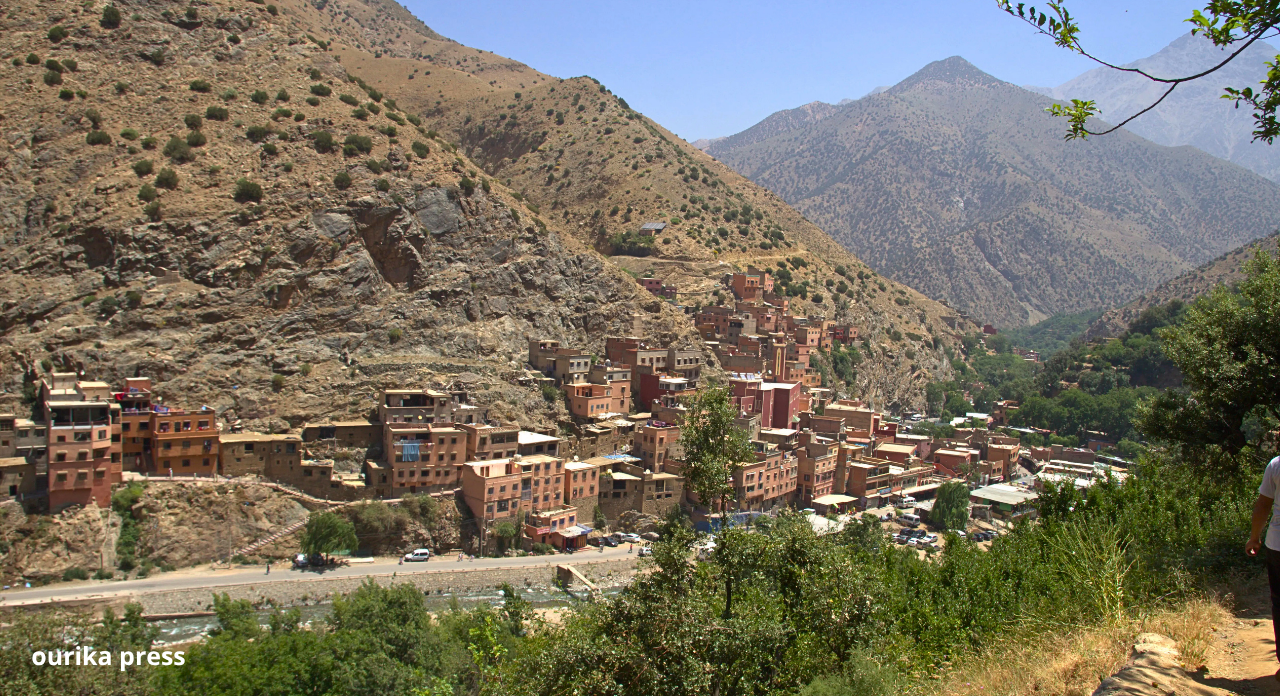
The Ourika Valley is far more than a spectacular destination renowned for its waterfalls and breathtaking landscapes that attract thousands of visitors each year. It is also a land of profound historical and cultural significance, where centuries of coexistence among Amazigh tribes forged a unique identity rooted in the mountains and sustained by the valley as a corridor of life, trade, and cultural exchange.
Historical records reveal that the social fabric of the Ourika Valley was built upon a well-structured tribal system that organized daily life, safeguarded the territory, managed natural resources, and preserved customs and traditions whose legacy remains visible today in the names of villages, seasonal festivals, and enduring social practices.
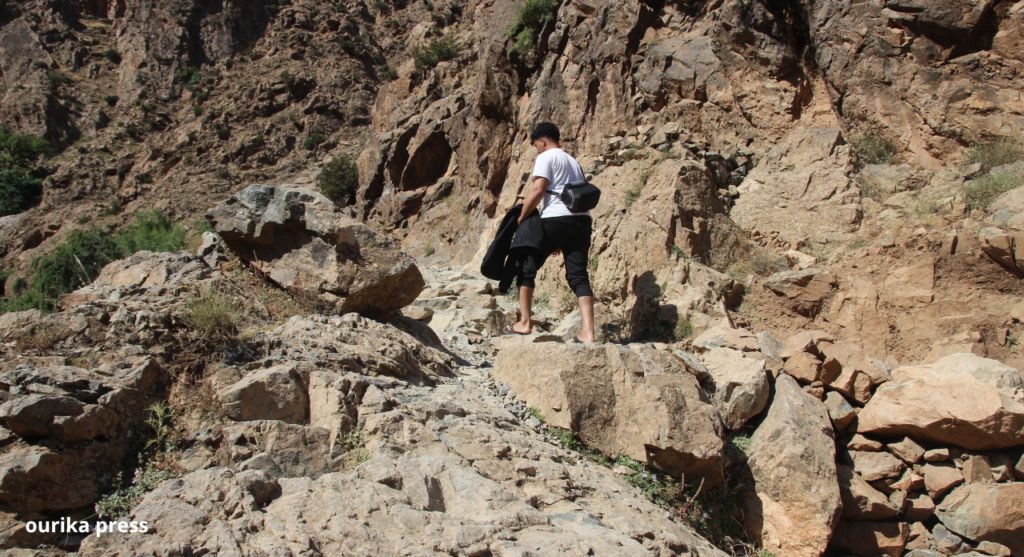
Two Tribes at the Heart of the Valley’s History
Historical and anthropological studies indicate that, for centuries, the Ourika Valley was divided between two principal tribes that shared its geographical landscape. This traditional organization was documented through extensive field research conducted during the first half of the twentieth century.
Aït Mnkad… The Mountain Gateway to Marrakech
The Aït Mnkad tribe settled in the lower part of the valley, where its strategic location created a natural connection between the High Atlas Mountains and the Haouz Plain, linking the community to Marrakech through commerce for generations.
The tribe became renowned for trading agricultural and mountain products, while many of its members worked in traditional crafts and construction projects throughout the Red City. These activities strengthened the economic and social ties between the mountains and Marrakech.
Researchers believe that the tribe traces its origins to ancient Amazigh settlements in the Haouz region before demographic and political transformations encouraged part of the population to establish themselves in the mountain areas.
Aït Bounkmat… Guardians of the Valley’s Spiritual Heritage
The upper valley is home to the Aït Bounkmat tribe, whose history is inseparably linked to the Shrine of Lalla Setti Fatma, one of the High Atlas Mountains’ most renowned spiritual and historical landmarks.
For generations, the tribe has preserved the tradition of overseeing the shrine and organizing its annual religious festival, which attracts visitors from across Morocco. Local oral tradition maintains that the family responsible for the sanctuary belongs to this tribe, giving it a distinguished place in the collective memory of the region.
Villages That Preserve Centuries of History
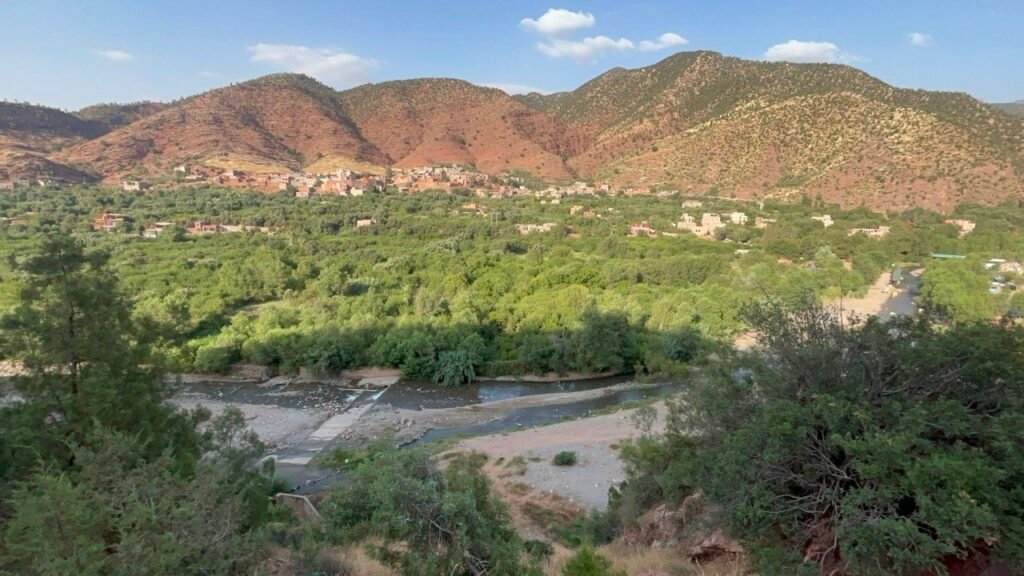
Scattered throughout the Ourika Valley are numerous villages, each preserving a chapter of the valley’s rich historical legacy.
Among the most notable are:
- Aït Setti Fatma, located beside the Shrine of Lalla Setti Fatma and named after the revered saint.
- Timlal, sometimes recorded as Timlil, believed by some historical sources to have served as an important local center during the Middle Ages.
- Aït Oumrid, where archaeological evidence suggests human settlement long before the arrival of Islam in the region.
- Aklim, known for its surrounding mountain forests, where charcoal production once flourished before being transported to the markets of Marrakech.
- Upper Tameslouht, historically connected through religious and social ties to the Zaouia of Tameslouht in the Haouz Plain, reflecting the close relationship between mountain and lowland communities.
Marrakech… The Economic Heart of the Ourika Valley
Throughout history, the relationship between Ourika and Marrakech extended far beyond geographical proximity, evolving into a model of economic and social interdependence.
For centuries, Marrakech served as the marketplace for mountain products such as natural honey, olive oil, wool, leather, and medicinal herbs, while the inhabitants of Ourika returned with manufactured goods, tools, and essential supplies.
This continuous exchange created a dynamic commercial and human network that integrated the Ourika Valley into Marrakech’s economic sphere and contributed to the prosperity of the region over many generations.
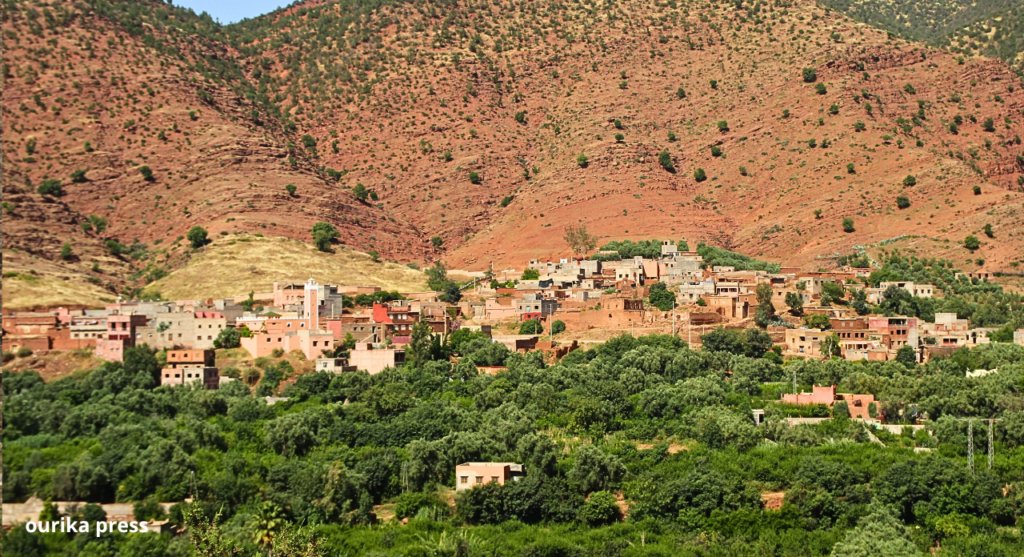
A Human Heritage That Tells the Story of the Valley
Today, the importance of the Ourika Valley extends beyond its stunning scenery and famous waterfalls. Its true wealth also lies in its remarkable historical and human heritage, reflected in the names of its tribes and villages, its traditional customs, seasonal festivals, and local markets that have been passed down from one generation to the next.
Understanding this heritage is an essential part of experiencing Ourika, for the beauty of the valley can only be fully appreciated through the history of the people who shaped its identity and preserved it across the centuries.