The History and Natural Heritage of the Ourika Valley: How Mountains and Snow Shaped One of Morocco’s Most Beautiful Landscapes
The History and Natural Heritage of the Ourika Valley: How Mountains and Snow Shaped One of Morocco’s Most Beautiful Landscapes

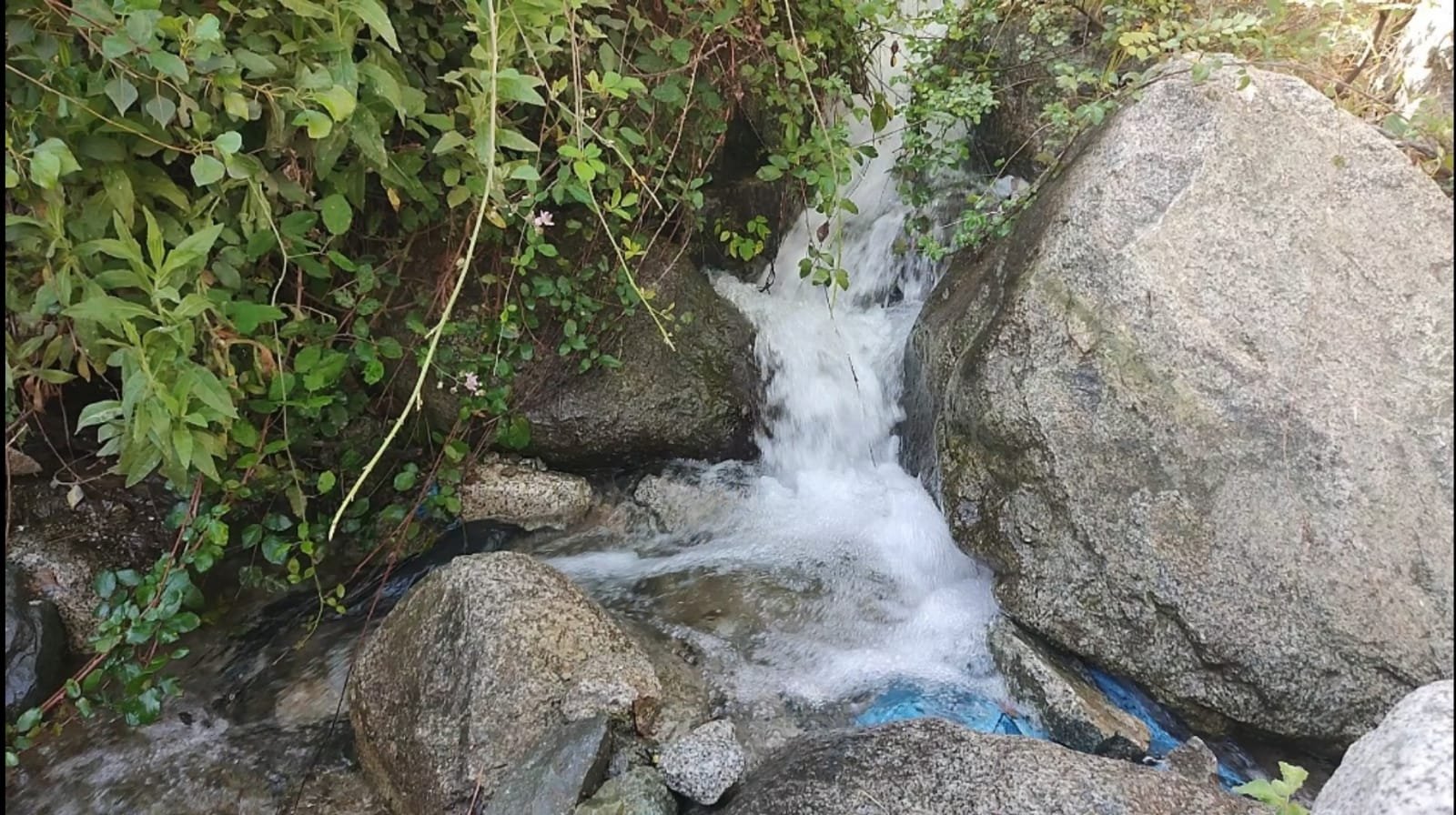
Between Mountains and Water: The Ourika Valley, a Natural Masterpiece
The fame of the Ourika Valley extends far beyond its cascading waterfalls and mountain resorts. Its remarkable reputation is deeply rooted in a unique geographical and natural history that has made it one of the most distinguished valleys in Morocco’s High Atlas Mountains. With its diverse landscapes, contrasting climate, abundant water resources, and rich vegetation, the valley forms a balanced ecosystem that has supported human settlement, agriculture, and tourism for centuries.
A Landscape That Shapes the Climate
The mountainous terrain of the Ourika Valley creates significant climatic diversity between the lower slopes and the high-altitude areas. The lower sections experience a semi-arid Mediterranean climate with warm summers and mild winters, while the higher elevations are characterized by a cold mountain climate where snow blankets the peaks throughout winter and, in some years, remains until April.
Annual rainfall ranges from 400 to 800 millimeters depending on altitude, making the valley one of the High Atlas’ richest areas in surface water resources and sustaining exceptional ecological vitality throughout the year.
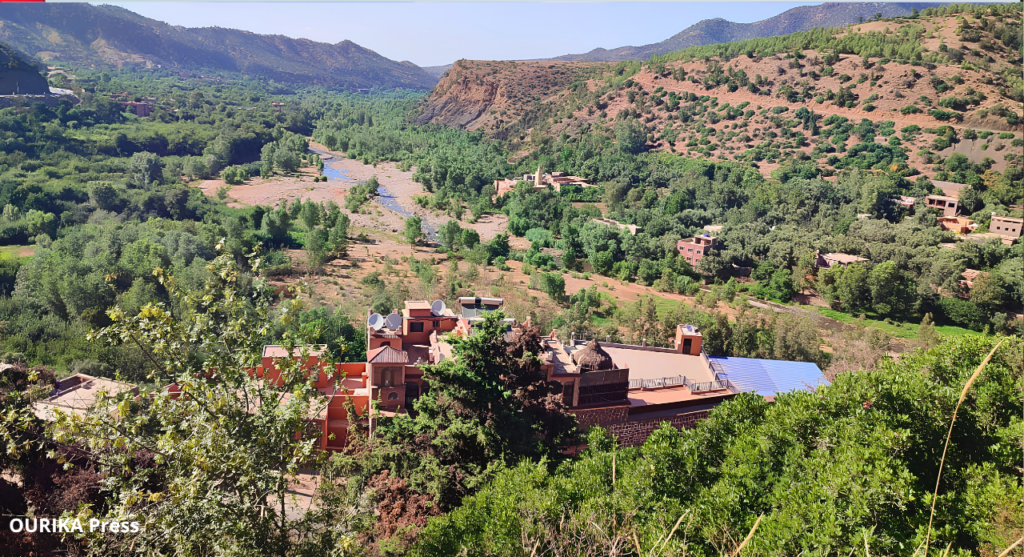
A Rich Vegetation Reflecting Environmental Diversity
The valley’s varying elevations and climatic conditions support a remarkably diverse plant cover. Olive, carob, almond, and apple trees dominate the lower slopes, forming part of the region’s traditional agricultural landscape. At higher elevations, forests of cypress, oak, and juniper provide essential ecological services by protecting soils and preserving environmental balance.
Historical studies indicate that these forests served for centuries as an important source of timber and forest products that supplied Marrakesh and surrounding areas, highlighting the valley’s environmental and economic significance within the High Atlas.
A Valley Sustained by Snowmelt
The Ourika Valley is among the High Atlas’ most consistently flowing river valleys. Its water supply depends primarily on the gradual melting of winter snow covering the mountain peaks, feeding rivers and streams throughout spring and summer.
This reliable water availability enabled local communities to develop sophisticated traditional irrigation systems based on canals, water channels, and community-managed water-sharing practices that have been preserved for generations, demonstrating the inhabitants’ long-standing expertise in sustainable water management.
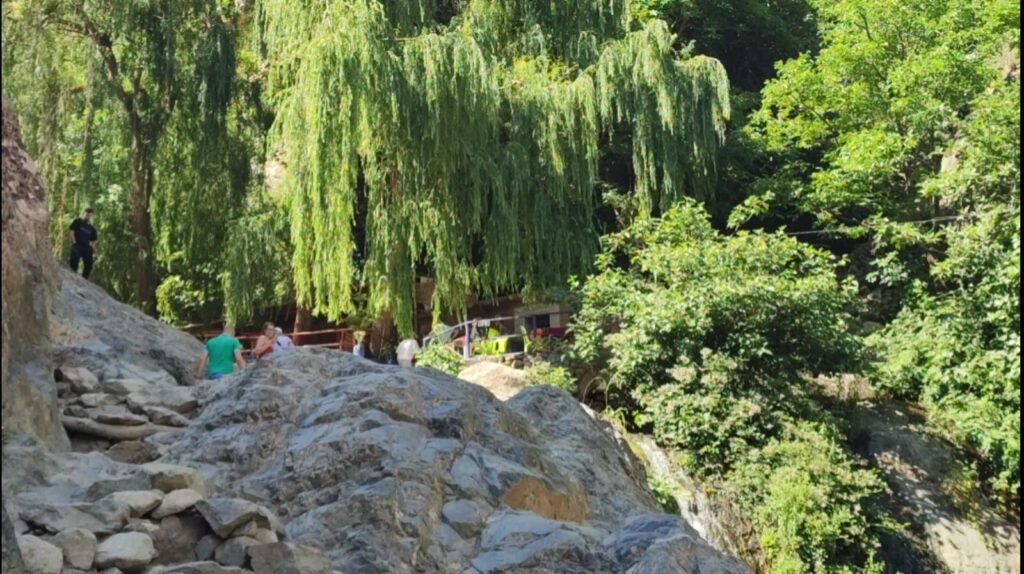
When Water Becomes a Destructive Force
While the waters of the Ourika Valley bring life and fertility, they have also caused devastating natural disasters. Throughout its history, the valley has experienced several floods, the most significant occurring in August 1995, when powerful flash floods swept through numerous villages and infrastructure, resulting in considerable human and material losses.
The disaster remains deeply embedded in the collective memory of local residents and marked a turning point in efforts to strengthen flood prevention and protective infrastructure across the valley.
Nature at the Heart of Ourika’s Identity
The history of the Ourika Valley cannot be understood without recognizing the close relationship between its people and their natural environment. The mountains provided protection, the snow ensured a continuous water supply, the forests supported local livelihoods, and the fertile soils encouraged agriculture and permanent settlement for centuries.
Today, the Ourika Valley is far more than a tourist destination. It is a unique natural landscape where ecological richness, geographical diversity, and historical heritage converge, continuing to attract visitors, researchers, and nature enthusiasts from Morocco and around the world.