
Carob Harvest Season in Ourika: A Mountain Fruit with Multiple Uses and Growing Value
Carob Harvest Season in Ourika: A Mountain Fruit with Multiple Uses and Growing Value

Ourika Press – Ourika
With the arrival of August, the harvesting of carob pods begins in several mountainous areas of Morocco. This fruit, which has been closely associated for decades with the Mediterranean environment and rural life, is now attracting growing interest because of its nutritional value and wide range of uses.
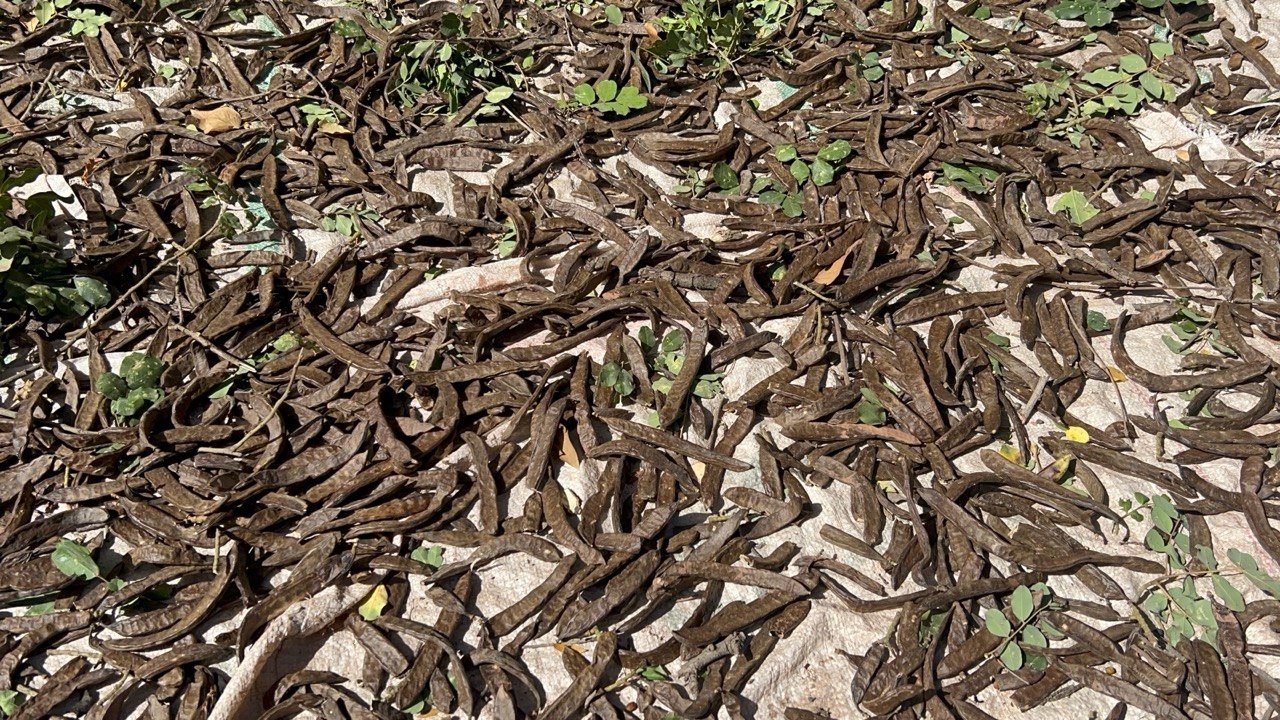
During a tour along the Ourika road, specifically in Douar Lkhamis, Aghbalou, the Ourika Press camera captured the beginning of the carob harvesting season. The ripe pods, recognizable by their dark brown color, have reached the harvesting stage, which, according to a local farmer, begins on August 1. The scene highlights the importance of this tree to communities living in mountainous areas.
What is carob?
Carob, or Ceratonia siliqua, is the fruit of an evergreen perennial tree belonging to the legume family. It is particularly widespread throughout the Mediterranean region and in some mountainous areas, including Al Haouz Province.
The carob tree is known for its ability to withstand dry climatic conditions, making it an important species in several Mediterranean and semi-arid regions.
The fruit grows in the form of a long pod that gradually changes from green to dark brown as it ripens. Each pod contains naturally sweet pulp and several hard seeds.
Agricultural and food references indicate that the carob tree has been cultivated and used for a long time throughout the Mediterranean. Its fruits are used for human and animal consumption, while its seeds are used in various food industries.
Why is carob considered a special fruit?
Carob pulp is naturally rich in sugars and dietary fiber. It also contains several minerals and plant compounds, including polyphenols.
The nutritional composition of carob varies depending on the variety, environmental conditions, maturity level, drying process and processing methods. Scientific studies generally indicate, however, that carob pods are rich in fiber and sugars while being relatively low in fat.
Carob also contains phenolic compounds and plant-based antioxidants, which have attracted scientific interest in its nutritional value and potential use as a food ingredient.
Carob and its fiber content
One of the main characteristics of carob is its significant dietary fiber content.
Fiber plays an important role in the diet, particularly as part of a balanced eating pattern. This is why carob powder is used in some food products designed to increase fiber content.
However, it is important to clarify that the nutritional properties of carob do not mean that it is a treatment for any disease. It is simply a nutrient-rich food that can be included as part of a varied and balanced diet.
Carob: a natural source of sweetness
One of the notable characteristics of carob is the relatively high level of natural sugars in its pulp, particularly sucrose, as well as glucose and fructose.
For this reason, carob pulp powder can be used in certain recipes as an ingredient that provides natural sweetness. It can also be processed into carob drinks or carob syrup.
Studies indicate that carob may contain high levels of sugar. It should therefore not be considered a sugar-free food simply because it is a natural product.
Can carob replace cocoa?
Yes. This is actually one of its best-known modern uses.
After the pods are dried, roasted and ground, they produce a brown powder with a naturally sweet flavor. Carob powder is used in certain foods and desserts as an alternative to cocoa or simply to add a distinctive flavor.
An important characteristic of carob is that it naturally contains neither caffeine nor theobromine, two compounds found in cocoa. This characteristic has contributed to the growing interest in carob powder for certain food preparations.
How is carob used?
Carob uses vary from one region and country to another. Some of the most common include:
1. Carob drink
Carob drink is one of the best-known traditional products made from the pods. Dried fruits or their extract can be used to prepare a naturally sweet beverage.
2. Carob syrup
Carob can be processed into a concentrated sweet product known as carob syrup, which is used in some traditional cuisines and desserts.
3. Carob powder
After drying and grinding, the pulp becomes a powder that can be used in beverages, desserts and baked goods. It is also used in some products as a cocoa substitute.
4. Food industries
The use of carob is not limited to its pulp. Its seeds contain an important substance known as locust bean gum, or carob gum.
This gum is extracted from the endosperm of the seeds and is used in the food industry as a thickener, stabilizer and texturizing agent. It is identified by the food additive number INS 410.
It is used in various food products, including certain dairy products, ice creams, confectionery, sauces and other foods, thanks to its ability to improve texture and stability.
Carob is not only for human consumption
Another important traditional use of carob is animal feed.
The pods can provide animals with a valuable source of energy. For this reason, the carob tree has long been considered an important rural resource, benefiting both human food consumption and livestock.
Carob benefits: what do studies say?
Research indicates that carob contains several important nutritional and plant-based components, including:
- dietary fiber;
- natural sugars;
- various minerals;
- polyphenols;
- plant compounds with antioxidant activity.
Scientific research has also examined possible links between carob compounds and certain potential effects on human health, particularly in relation to digestion, metabolism and antioxidant activity.
However, it is important to distinguish between the presence of beneficial compounds in a food and evidence that the food can treat a specific disease. Results from laboratory or preliminary studies do not mean that carob is a proven medicine or medical treatment.
A drought-resistant tree that remains part of mountain landscapes
The importance of the carob tree lies not only in its fruit but also in the tree itself.
Carob is a Mediterranean species capable of adapting to relatively harsh climatic conditions. This gives it particular importance in areas affected by water scarcity and high temperatures.
As climate change continues and interest grows in drought-resistant species, the carob tree is gaining additional importance because of its adaptation to Mediterranean environments.
Harvest season: work that requires patience
Carob harvesting is more than simply collecting pods from trees. It is a season awaited by many farmers and residents in areas where carob trees are widespread.
After harvesting, the pods generally go through several stages, including drying, sorting and storage, before being consumed, sold or processed into other products.
As the fruits mature, they turn dark brown, reaching the stage at which they are suitable for harvesting and various uses.
Carob: a natural product that can support the local economy
Carob also represents an important economic opportunity for rural and mountainous areas, particularly when its exploitation goes beyond selling raw pods and extends to processing them into higher-value products.
Instead of selling carob in its raw form, the fruit can be transformed into powder, beverages, syrup or ingredients used in various food industries.
The valorization of local products of this kind can contribute to creating new economic opportunities and supporting the income of farmers and local communities.
From the Ourika road: an image that tells the story of a harvest season
The image published today by Ourika Press from the Ourika road documents the beginning of this season and brings renewed attention to a mountain fruit that many people know, but whose range of uses and nutritional and industrial value are less widely understood.
Carob is therefore more than just a brown pod harvested from trees. It is a natural product with a long Mediterranean heritage, with uses ranging from traditional cuisine to modern food industries.
As the harvesting season begins in the region, this natural resource deserves greater attention and development, particularly through the promotion of local products and the transformation of raw materials into higher-value products.
From the Ourika road, Ourika Press continues to document the daily life and natural environment of the region, while highlighting local resources and treasures that deserve to be known by everyone.
📸 Photo: Ourika Press – Ourika Road
Ourika Press | The voice of the region from the heart of the story