The Siti Fadma Moussem in Ourika: An Annual Ritual Reviving the Memory of Place and Bringing Together Spirituality, Hospitality and Amazigh Heritage
The Lalla Siti Fadma Moussem in Ourika: An Annual Ritual Reviving the Memory of Place and Bringing Together Spirituality, Hospitality and Amazigh Heritage

Ourika Press – Ourika Tourism Guide
In the heart of the Ourika Valley, where the mountains embrace the course of the river and where collective memory still preserves many ancestral rituals and traditions, the annual moussem of the Lalla Siti Fadma zawiya began on the afternoon of Tuesday, August 11, 2026.
Renewed every year, this gathering brings together religious devotion, hospitality, family ties and the celebration of local cultural heritage.
Far from being merely a temporary festive gathering, the moussem reveals an important dimension of the social and spiritual history of the people of the Ourika Valley. Generations have preserved traditions of welcoming guests, hospitality and communal celebrations, creating a setting where religious practices intertwine with social customs and popular artistic expressions.
The story begins after the Asr prayer
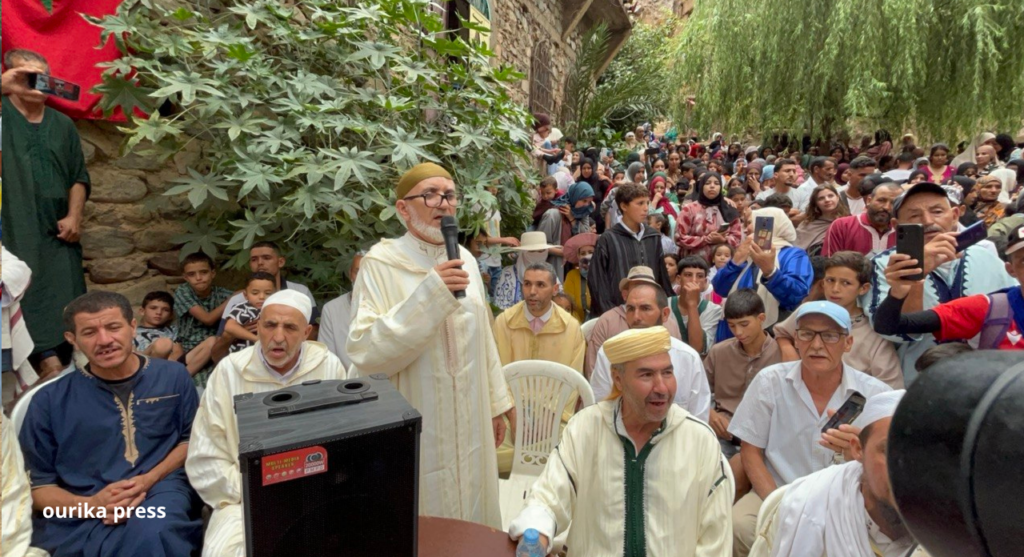
Following the Asr prayer, the moussem gradually took on a deeply spiritual atmosphere. The voices of imams and Quran reciters filled the air with verses from the Holy Quran, followed by prayers and blessings upon the Prophet, as well as prayers for His Majesty King Mohammed VI, Commander of the Faithful.
After these religious ceremonies, local authorities, community elders, notables, and representatives of neighboring tribes and villages were welcomed, reflecting the important place the moussem continues to occupy within the social fabric of the region.
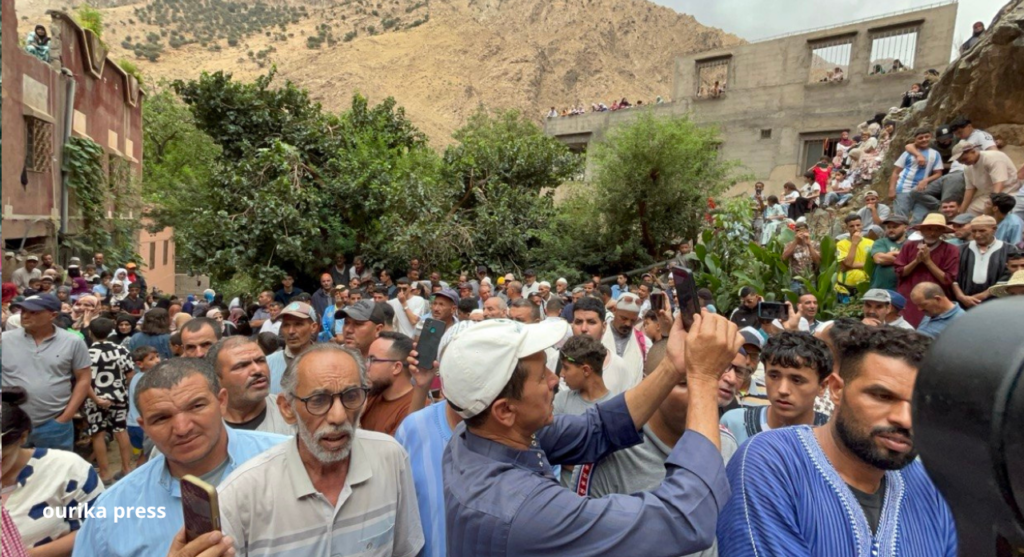
The large presence of people from different generations was particularly striking: men, women, children and young people all gathered together, confirming that the moussem still holds an important place in local collective memory despite the profound social transformations of recent decades.
The ritual sacrifice: a symbolic announcement of the moussem’s opening
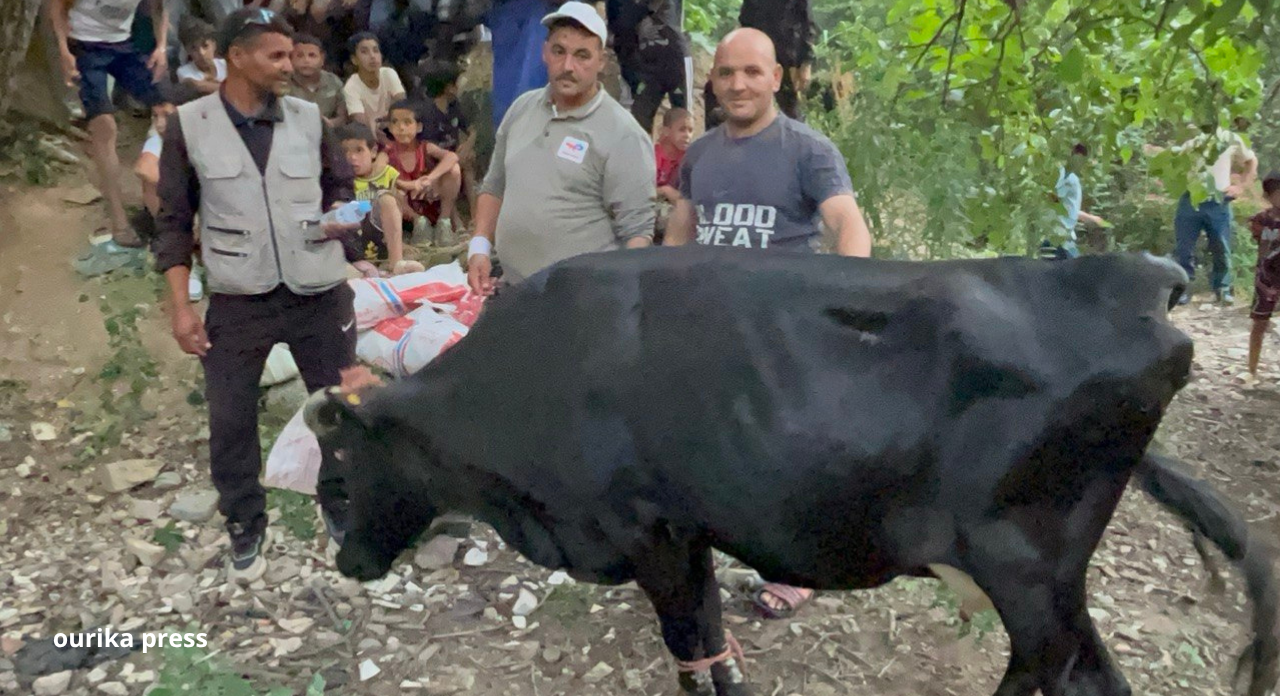
Amid the gathering, the ceremonial sacrifice marked the official opening of the moussem. A black cow was led to the designated slaughtering site beneath a tree locally known as “Jou,” in a ritual passed down from one generation to another.
As the animal arrived, women’s ululations rose into the air, while men, children and young people recited prayers and blessings upon the Prophet. It was a moment rich in religious and social symbolism, deeply rooted in the popular moussem traditions of Morocco’s Atlas regions.
The sacrifice was carried out by the chief butcher, assisted by several professional butchers, while the sheep offered by neighboring tribes and villages were also slaughtered, continuing an old tradition based on collective participation in the organization of the moussem.
When the sacrifice becomes an open table
Once the sacrifices are completed, another equally important stage begins: preparing food and welcoming guests.
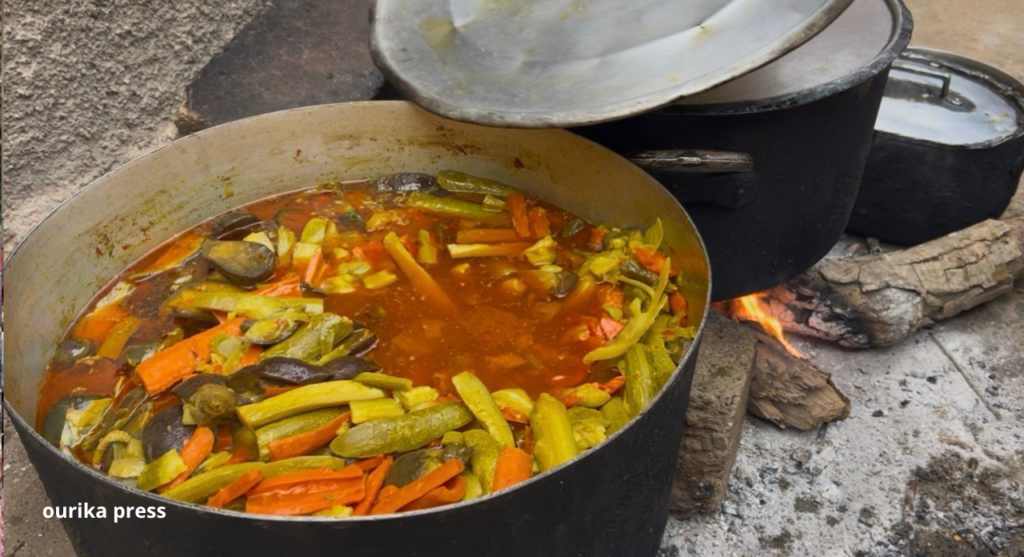
In the zawiya’s kitchens, women prepare a variety of meat dishes, couscous and other traditional foods. At the same time, women from neighboring villages, particularly from the Zaouia and Lalla Siti Fadma villages, prepare their own dishes to share with visitors and guests.
This is where one of the most remarkable characteristics of local society becomes visible: collective hospitality.
Visitors do not come to the moussem simply as tourists or spectators. They become guests of the local community. Doors are opened to them and tables are set for them, expressing what can be described as the enduring tradition of Ourika hospitality.
“To everyone who is here… welcome to you all”
The following morning, the scene is renewed with a gesture carrying deep symbolic meaning.
In a loud voice, the tribal elder or community sheikh addresses those present with a traditional call:
“To everyone who is here… welcome to you all.”
This welcoming call is not limited to a single occasion. It is repeated during breakfast, lunch and dinner, emphasizing that welcoming guests is not merely a matter of protocol, but an essential part of the moussem’s social philosophy.
The words are simple, but their meaning is profound. Whether coming from a neighboring village or a distant city, every visitor enters a social space where belonging matters less than presence itself—a presence celebrated and welcomed with generosity.
Ahwach: when memory speaks through art
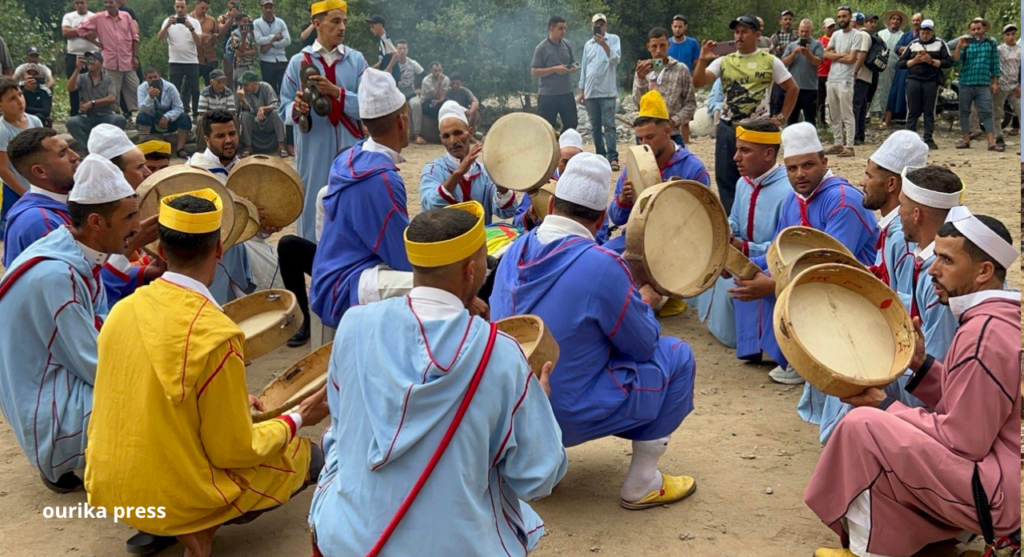
Away from the zawiya, beside the river, a large open space was prepared to welcome hundreds of people who came to enjoy the performances of local folkloric groups.
Here, Ahwach takes center stage as one of the most important forms of collective expression in Morocco’s Amazigh culture.
Rows of performers, coordinated rhythms, collective voices and synchronized movements transform the performance into much more than entertainment. It also becomes a means of reviving part of the region’s cultural memory.
The festivities continue late into the night, turning the moussem grounds into a vibrant meeting place for local residents, visitors and guests.
A moussem for the whole family
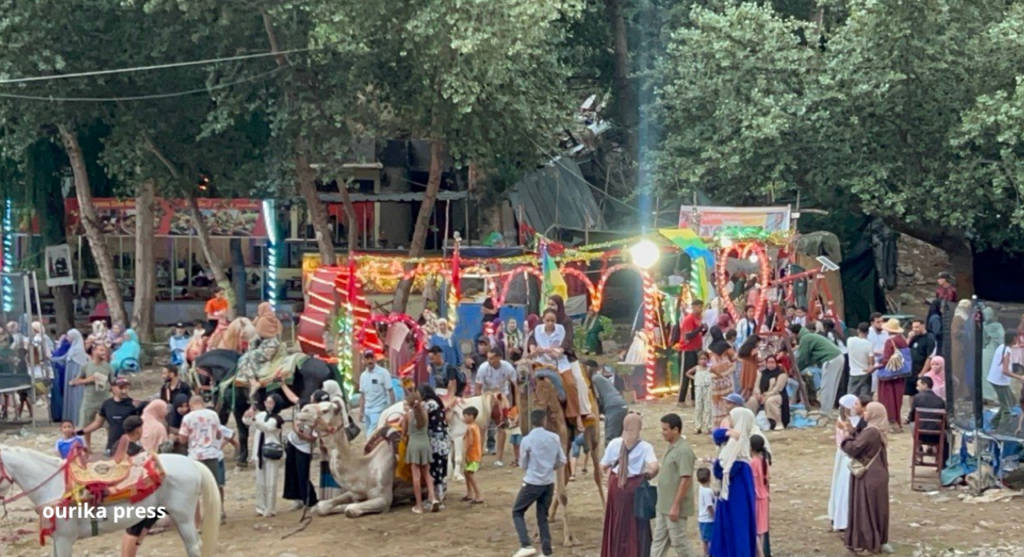
The moussem is not limited to religious ceremonies, communal meals and Ahwach performances. An area dedicated to games and entertainment was also established near the zawiya for children and young people.
Along the river, numerous shops and stalls offer various everyday goods, souvenirs and products traditionally associated with Moroccan popular moussems.
Together, these activities turn the moussem into a space that is simultaneously religious, social, cultural and economic.
From religious memory to tourism heritage
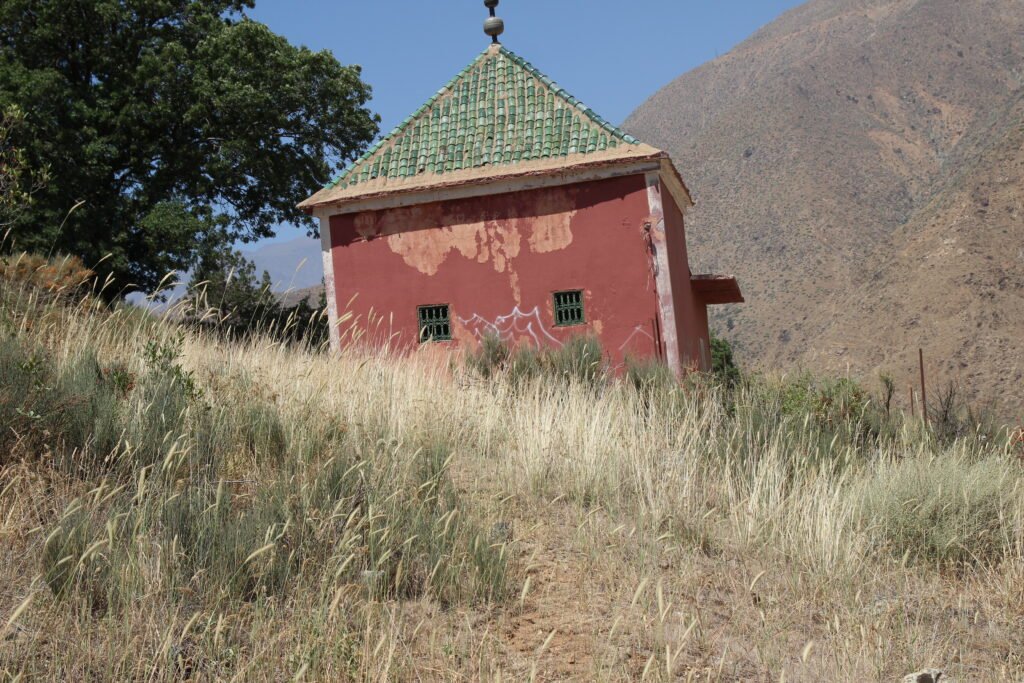
In local memory, the Lalla Siti Fadma zawiya is associated with a spiritual dimension that has made it a place for communal gatherings, religious observance, family reunions and the celebration of the annual moussem.
Its location within the Ourika Valley also gives the event a distinctive tourism dimension. The site lies in one of the best-known mountain areas near Marrakech, surrounded by the river, mountains, traditional villages and routes leading to renowned natural and tourist attractions, particularly the Siti Fadma area and its waterfalls.
From this perspective, the moussem can be viewed as a cultural event that allows visitors to discover another side of Ourika—a side that cannot be captured through photographs of landscapes alone, but is experienced through its people, customs, hospitality, food, arts and communal rituals.
A moussem that goes beyond celebration
The significance of the Lalla Siti Fadma moussem lies in the fact that it goes beyond the concept of a seasonal celebration. It has become an annual occasion for reconnecting people with their social environment.
It strengthens family ties, brings relatives and guests together, renews relationships between villages and tribes, promotes values of cooperation and solidarity, and preserves elements of the religious, cultural and artistic heritage that have been shaped over generations.
It also gives younger generations an opportunity to discover rituals that may no longer be as present in their daily lives as they were in those of their parents and grandparents.
Ourika: when heritage becomes part of tourism
At a time when tourism is increasingly seeking authentic experiences, Ourika’s value extends far beyond its landscapes, waterfalls, restaurants, cafés and mountain trails.
There is another dimension of equal importance: living heritage.
The Lalla Siti Fadma moussem is one of the occasions that allows visitors to discover this dimension of the valley, where customs, hospitality, traditional arts, cuisine and communal rituals become living expressions of local identity.
Enhancing and promoting these traditional moussems, while respecting their religious and social significance, could therefore provide an important foundation for cultural tourism in the Ourika Valley. It can also help present a deeper and more authentic image of the region, moving beyond the stereotypical representation that reduces Ourika to waterfalls and scenic landscapes.
A memory renewed every year
Anyone who experienced this year’s Lalla Siti Fadma moussem, as we did during our field coverage on Tuesday, August 11, 2026, can understand that this is far more than a temporary gathering.
It is an appointment with memory.
It is a moment when the voices of Quranic recitation and prayer, women’s ululations, Ahwach songs, the aromas of couscous and meat, and the traditional call welcoming guests all come together in one place, on the banks of the Ourika River.
In this way, the moussem continues to fulfill its historic role: bringing people together, strengthening family ties, honoring guests, preserving collective memory and transmitting heritage from one generation to the next.
As Ourika continues to evolve, lifestyles change and tourism expands across the region, such traditional moussems remain powerful reminders that the strength of a place lies not only in its mountains, waters and landscapes, but also in the memory of its people, their traditions, generosity and ability to keep their heritage alive.
Ourika Press – Ourika Tourism Guide
Field report from the heart of the Lalla Siti Fadma Moussem – August 11, 2026
video link