Ourika During the French Protectorate: A Period of Radical Transformation
Ourika During the French Protectorate: A Period of Radical Transformation

Introduction
In the previous episode of Ourika Tourist Guide, we explored the historical and contemporary transformations experienced by the Ourika Valley during the Saadian period (1510–1659) and the early Alaouite period, beginning in the second half of the 17th century.
In this episode, we move to one of the most significant turning points in the history of the region: the period of the French Protectorate, from 1912 to 1956.
The establishment of the French Protectorate marked a profound change in Morocco’s political, administrative and economic structures. The Ourika Valley, located close to Marrakech and extending into the High Atlas, gradually became part of a new administrative and economic environment that introduced major changes to the traditional organization of the region.
Ourika Before the Protectorate: A Society Closely Connected to the Land
Before the Protectorate, life in Ourika was largely shaped by the mountains, agricultural land, water resources and local communities.
The valley’s villages developed around agriculture, livestock breeding, irrigation and exchanges between mountain communities and the plains of the Haouz.
Social organization was strongly connected to local customs, community solidarity and traditional forms of authority. The mountain environment also played an important role in shaping the economic and social relationships between villages and tribes.
This traditional structure would gradually begin to change during the 20th century.
1912: Morocco Enters a New Historical Phase
The Treaty of Fez, signed on 30 March 1912, formally established the French Protectorate over Morocco. The Protectorate lasted until independence in 1956.
For Morocco’s rural and mountainous regions, this period brought profound transformations in administration, infrastructure, economic activity and social organization.
The changes did not occur everywhere at the same pace. In areas surrounding Marrakech and extending toward the High Atlas, the gradual expansion of administrative and economic structures created new connections between mountain communities and the urban center.
For Ourika, its geographical proximity to Marrakech would increasingly contribute to its integration into these new networks.
From Traditional Organization to Modern Administration
One of the major transformations during the Protectorate was the gradual expansion of modern administrative structures.
Traditional forms of local organization continued to exist, but they increasingly operated alongside new administrative and judicial institutions.
This process contributed to changing the relationship between local communities, public authorities and the central administration.
The mountain valley was therefore no longer functioning solely through its traditional social and tribal structures. It was gradually becoming part of a wider administrative system linked to Marrakech and the surrounding Haouz region.
Roads and the Opening of the Valley
Infrastructure played an important role in transforming the relationship between Ourika and Marrakech.
The development of roads gradually facilitated movement between the city and the valley, opening the area to new forms of transportation and economic exchange.
The arrival of motor vehicles represented more than a simple technological change. It helped reduce the isolation of mountain communities and facilitated the movement of people, goods and visitors.
Over time, these new connections would contribute to transforming Ourika from a predominantly rural and agricultural valley into a region increasingly connected to the urban economy of Marrakech.
The Emergence of Modern Education
Education was another important element of the transformation.
The introduction of modern schooling gradually created new educational opportunities for children in the region, alongside the traditional forms of religious and community-based education that had existed previously.
The development of schools contributed, over the long term, to the emergence of new generations with different educational experiences and stronger connections to administrative and urban institutions.
However, access to modern education remained gradual and uneven, particularly in mountainous and remote areas.
Ourika and the Beginnings of Tourism
The geographical and natural characteristics of the Ourika Valley also attracted increasing attention.
Its proximity to Marrakech, combined with its mountains, rivers, villages and traditional way of life, made the valley a destination for excursions, particularly for European residents and visitors to Marrakech during the Protectorate period.
At first, tourism remained limited and largely concentrated around short excursions into the valley.
Nevertheless, these early visits marked the beginning of a transformation that would become much more significant after Morocco’s independence.
Economic and Social Transformations
The Protectorate also contributed to the integration of rural and mountain communities into wider economic networks.
Traditional agricultural production remained central to life in Ourika, but new forms of exchange gradually developed between the valley, Marrakech and the wider Haouz region.
Roads, transportation and markets facilitated the movement of agricultural products and other goods.
These developments slowly changed patterns of consumption, trade and economic interaction within the valley.
Amazigh Identity in a Changing Environment
Despite these profound changes, the cultural identity of Ourika remained deeply rooted in its Amazigh heritage.
Language, traditions, architecture, agricultural practices, collective solidarity and local customs continued to form an essential part of the region’s identity.
The transformation brought by the Protectorate therefore did not simply replace the traditional culture. Instead, it created a complex process in which traditional structures coexisted and interacted with new administrative, economic and social influences.
This interaction between continuity and change remains one of the most important characteristics of the modern history of Ourika.
1956: Independence and the Beginning of a New Chapter
Morocco regained its independence in 1956, bringing the French Protectorate to an end.
For Ourika, this marked the beginning of another period of transformation.
The decades that followed witnessed major demographic, economic and social changes throughout the region.
Population growth increased pressure on natural resources, particularly land and water, while new roads, public services, schools and economic activities gradually changed the appearance and functioning of the valley.
From a Traditional Valley to a Tourist Destination
During the decades following independence, Ourika gradually became one of the best-known mountain destinations in the Marrakech region.
The valley’s natural landscapes, waterfalls, agricultural terraces, traditional villages and Amazigh cultural heritage attracted increasing numbers of Moroccan and international visitors.
Tourism progressively became an important component of the local economy, creating new activities and employment opportunities while also bringing new challenges related to environmental protection, urban development and the preservation of local heritage.
Today, Ourika represents a remarkable meeting point between nature, history and Amazigh culture.
Between Memory and Transformation
Looking at Ourika today allows us to understand the depth of the transformations that have taken place over the past century.
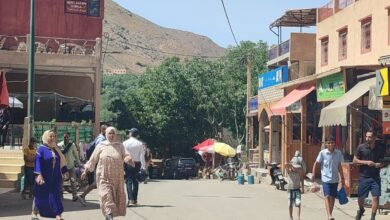
The roads that connect the valley to Marrakech, the development of education, the expansion of public services and the growth of tourism have profoundly changed everyday life.
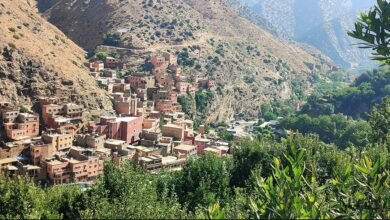
Yet, behind these modern developments, many elements of the old Ourika remain visible: traditional villages, agricultural terraces, irrigation systems, local architecture, Amazigh traditions and the strong relationship between communities and the mountain environment.
The history of Ourika is therefore not simply a story of change. It is also a story of continuity, adaptation and the preservation of collective memory.
Conclusion
The period of the French Protectorate represents one of the most important turning points in the modern history of Ourika.
Between 1912 and 1956, the valley gradually entered a new administrative, economic and social environment. Roads, education, administration and new forms of economic exchange contributed to opening the region to the outside world.
After independence, these transformations continued at an even faster pace, eventually contributing to the emergence of modern Ourika as an important tourist destination in the High Atlas.
Understanding this history is essential for appreciating Ourika today—not only as a beautiful tourist destination, but also as a territory shaped by centuries of cultural heritage, social transformation and adaptation.
References and Bibliography
The historical background of this episode draws on academic and documentary references concerning the High Atlas, the Haouz region, Moroccan rural societies and the French Protectorate, including works by Jacques Berque, Paul Pascon, Robert Montagne, Daniel Rivet and other researchers, as well as archival materials relating to the High Atlas and the Marrakech region.
Note: General historical works on the High Atlas and the Protectorate should not be treated as direct evidence for every specific event in Ourika. Specific claims concerning roads, schools, administrative centers or the exact chronology of developments in the valley should be supported by local archival documents or other direct sources whenever available.