Aïn Sidi El Wafi in Tighdouine: Between Springs, Popular Memory and Archaeological Heritage in the High Atlas
Aïn Sidi El Wafi in Tighdouine: Between Springs, Popular Memory and Archaeological Heritage in the High Atlas

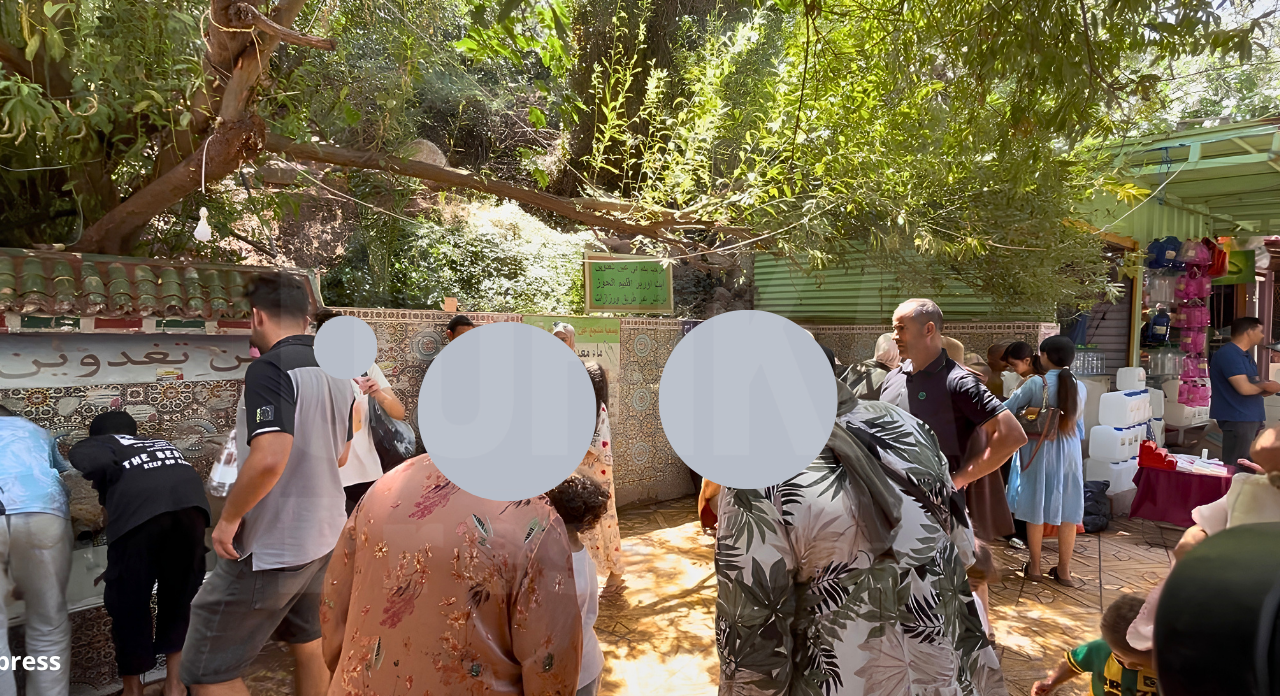
Deep in the mountains of Al Haouz, where rocks and trees meet flowing springs, Tighdouine is one of those places whose secrets are not fully revealed during a first visit. Among its most notable landmarks is Aïn Sidi El Wafi, locally also known as Aïn Tighdouine or “Al Ouina”. Over the years, the spring has become associated with naturally carbonated mineral water and a number of popular stories passed down through generations, eventually turning it into a destination visited by people from different parts of Morocco.
As part of its field coverage of the natural and tourism potential of the Al Haouz region, Ourika Press travelled to Aïn Sidi El Wafi in Tighdouine to observe the site firsthand and document its natural surroundings and distinctive features through photographs and video. The aim was to present the location to readers as it actually appears on the ground, rather than relying solely on theoretical descriptions.
A spring in the heart of a mountainous landscape
Aïn Sidi El Wafi is located approximately one kilometre from the headquarters of the Arbaa Tighdouine commune, in a natural setting where trees, rocks and water come together. The peaceful landscape gives the site a distinctive character and makes it potentially suitable as a stop along mountain tourism routes in Al Haouz.
Tighdouine lies within the High Atlas mountain region, an area known for its remarkable natural and cultural diversity. Its heritage extends beyond springs, valleys and mountain landscapes to include archaeological remains dating back to very ancient periods.
And this is where the wider story begins.
From the spring to Mount Yagour… a history older than memory
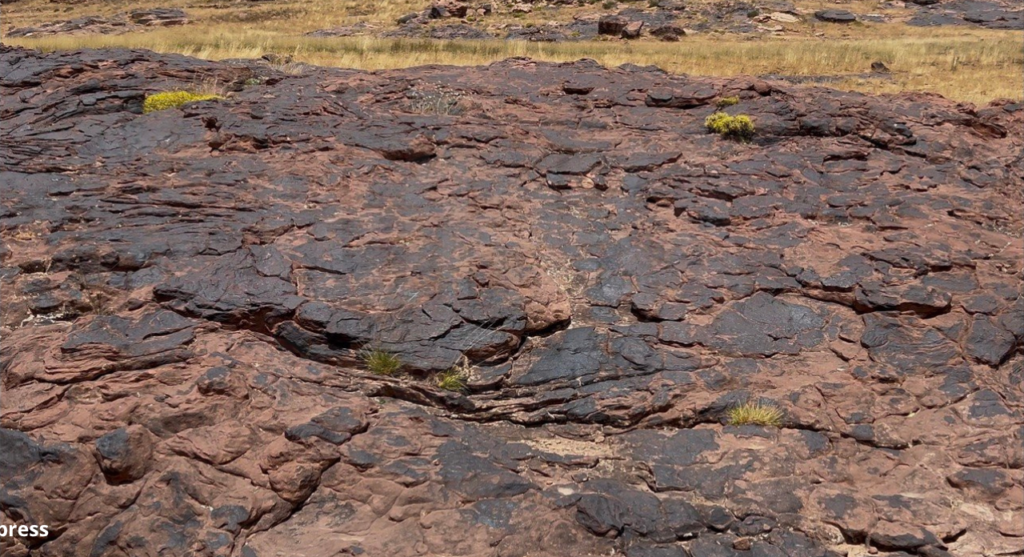
It is impossible to speak about Tighdouine without mentioning Mount Yagour, one of the most important archaeological sites in the High Atlas hinterland of Al Haouz.
At an altitude of around 2,600 metres, the mountain contains a significant number of ancient rock engravings, including what is commonly known as the “Sun Panel”. The archaeological area covers an estimated 4,000 hectares and extends across territories belonging to several local communities, including the Zat tribal district associated with Tighdouine.
These engravings are particularly important because they provide a rare window into the relationship between ancient human communities and this mountainous environment. It was not simply an isolated natural landscape, but a territory used for movement, settlement and the exploitation of natural resources.
From this perspective, the springs of Tighdouine form part of a much broader story: the story of people, water and mountains in the High Atlas. However, it is important to stress that establishing a direct connection between Aïn Sidi El Wafi itself and a specific human use during prehistoric times would require more detailed archaeological and hydrogeological research.
When did Aïn Sidi El Wafi become known?
Several local accounts circulate about the spring. According to some testimonies passed down locally, the recognition and scientific examination of the characteristics of its water may date back to the colonial period, when, according to local accounts, a French engineer examined the water and concluded that it was suitable for drinking and rich in mineral elements.
In popular memory, the spring has also become associated with stories of people who visited it seeking relief from various health problems. One of the best-known stories concerns a person suffering from a serious illness whose recovery was, according to popular tradition, attributed to the use of the spring’s water.
However, as Ourika Press presents these accounts to its readers, it is important to distinguish between inherited popular narratives and scientifically documented medical facts. Such stories are part of the oral memory of the site, but they cannot be presented as scientific evidence that the spring water can treat cancer or other diseases.
This is also part of what makes the site valuable: not only what can be scientifically established in a laboratory, but also the stories that have accompanied the spring and preserved its place in the collective memory of local communities.
Carbonated water with distinctive mineral characteristics
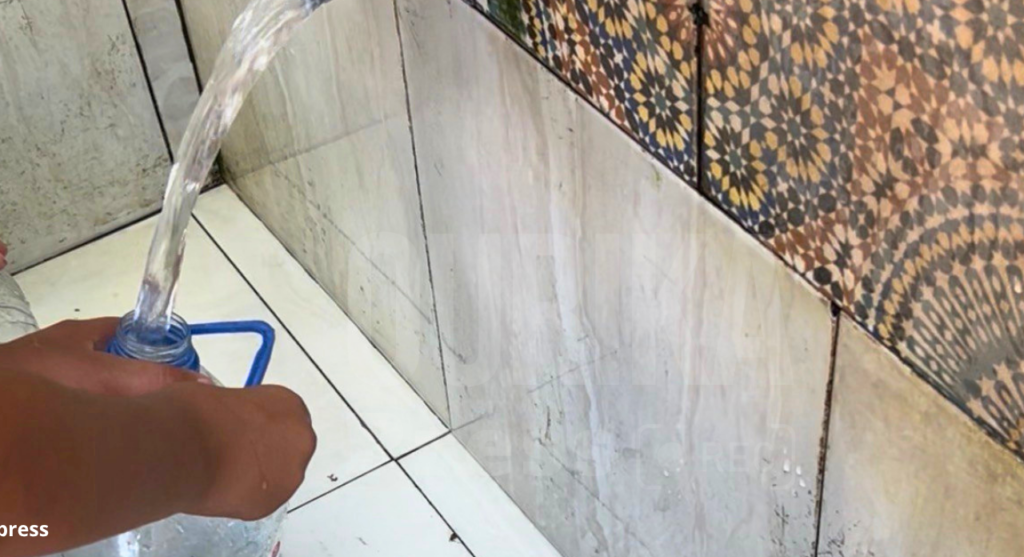
One of the most noticeable features of Aïn Sidi El Wafi is the nature of its water, which is locally described as mineral and naturally carbonated. This characteristic has contributed to the spring’s popularity among visitors.
Depending on the type of rocks they pass through and their underground pathways, natural mineral waters may contain various elements, including magnesium, calcium, sodium and bicarbonates.
Scientifically, however, it is important to note that currently available information does not provide a published laboratory analysis establishing the precise concentrations of these elements in Aïn Sidi El Wafi’s water. Therefore, specific figures or mineral percentages should not be attributed to this spring without a recent and properly documented analysis.
Likewise, claims about the water’s supposed benefits for digestion, kidney stones or other health conditions remain, based on the available sources, largely linked to popular experience and visitors’ personal testimonies rather than clinical medical studies proving that the water can treat such diseases.
This clarification does not diminish the value of the spring. On the contrary, it allows the site to be presented with greater accuracy and credibility.
Water and clay… a continuing popular tradition
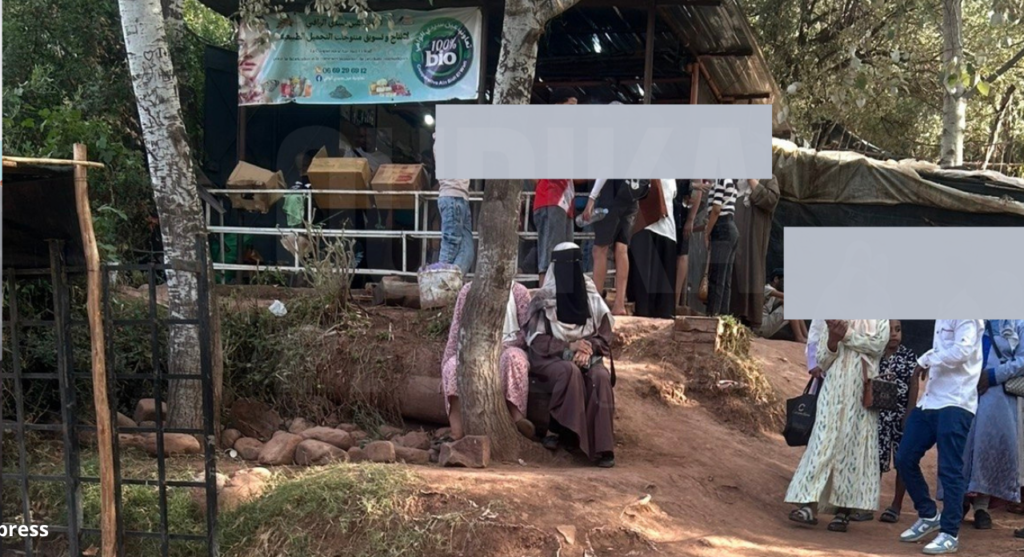
The site’s reputation is not limited to its water. Aïn Sidi El Wafi is also associated with the use of clay found nearby by some visitors, particularly in popular practices related to skincare.
The Ourika Press camera observed men, women and young girls applying a dark-coloured clay mask to their faces, with the aim of brightening the skin and reducing pimples and impurities.
When asked about the practice, most of the men and women interviewed said they believed that this type of mask was effective in removing impurities, brightening the complexion and reducing sagging and certain skin irregularities.
Once again, these practices belong to popular tradition and local experience and should not be confused with scientifically proven medical treatments.
Nevertheless, their continued use reveals a distinctive relationship that has developed between local communities, visitors and the natural resources of the site. This relationship deserves to be documented and studied as part of the region’s intangible cultural heritage.
Tighdouine… from rural territory to a tourism destination
Over the past several decades, particularly since the 1990s, Tighdouine has gradually evolved in terms of its image and profile, as interest in its natural and mountainous assets has increased.
The area now attracts visitors from different Moroccan cities, as well as members of the Moroccan diaspora and foreign visitors, drawn by its mountain landscapes, numerous springs, surrounding scenery and hiking routes.
Tighdouine is also characterised by the presence of several natural springs, some carbonated and others non-carbonated. This diversity gives the region particular hydrological and natural value, while also highlighting the importance of studying each spring individually rather than assuming that all of them have the same mineral composition.
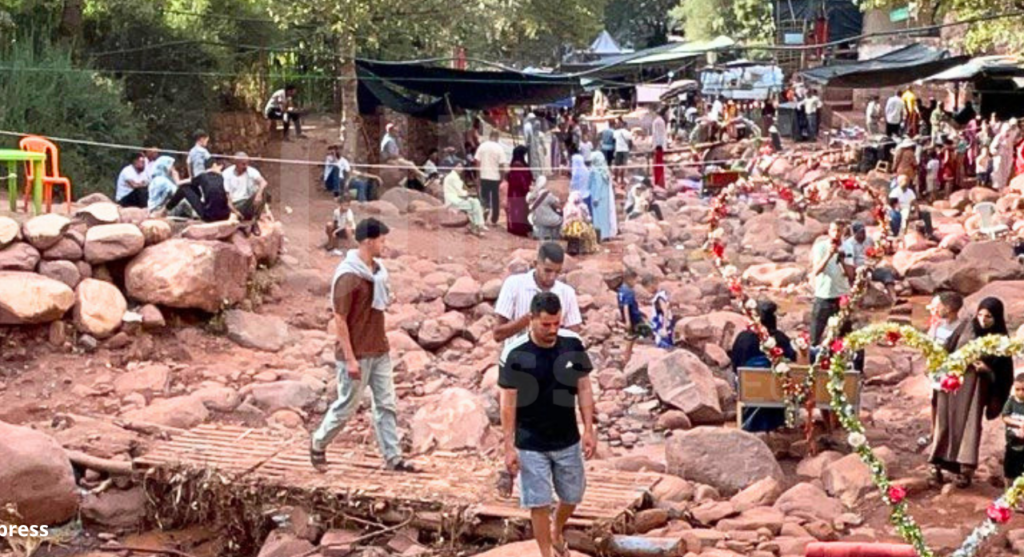
A tourism treasure that deserves greater investment and promotion
Despite Tighdouine’s many assets, transforming this potential into a fully integrated tourism product still requires further efforts.
Roads, infrastructure and tourism services could be improved, while archaeological sites — particularly the rock engravings of Mount Yagour — deserve greater attention, documentation, promotion and preservation.
Most importantly, this development should take place while protecting the region’s identity and natural environment. Tourism should not become a source of pressure on ecosystems or water resources, but rather an opportunity for sustainable local development.
Ourika Press at Aïn Sidi El Wafi
Through this field visit, Ourika Press sought to convey to readers a glimpse of the site as it exists in reality: its natural environment, spring, rocks, trees, atmosphere and the many details of Tighdouine that words alone cannot fully capture.
In our view, tourism journalism is not simply about describing a place as “beautiful”. It means going there, observing it firsthand, filming it, researching its history, distinguishing documented facts from popular narratives, and then presenting it to readers in a way that respects the truth while preserving the sense of discovery.
Aïn Sidi El Wafi is one of those places where water, nature, popular memory and archaeological heritage come together within a single mountainous landscape.
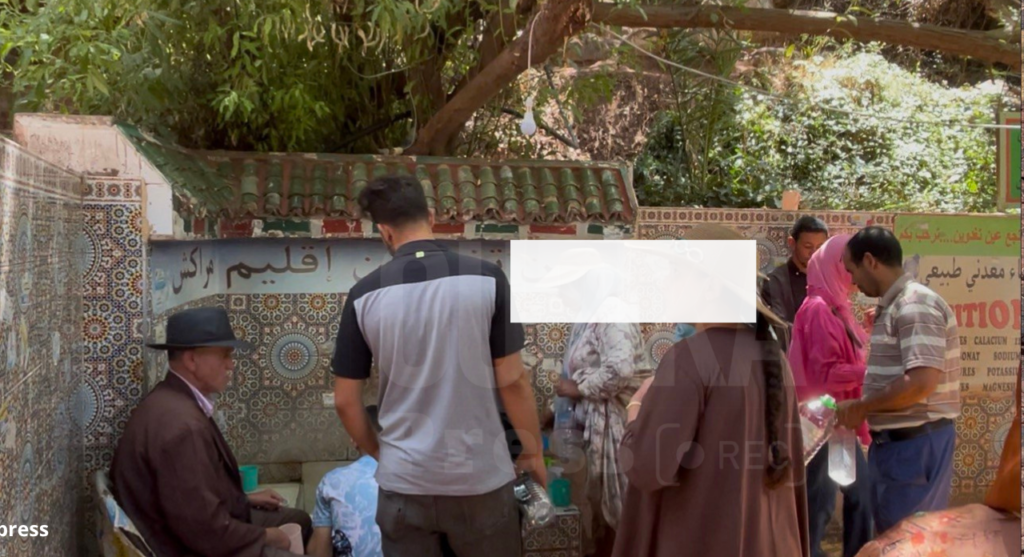
A journey that does not end at the spring
Perhaps the most fascinating aspect of Aïn Sidi El Wafi is that it is not merely a spring. It is a gateway to a much wider world: Tighdouine, with its mountains, springs, trails and local stories, as well as Mount Yagour and its ancient engravings, which remind us that human beings were present in and interacting with this landscape thousands of years ago.
Pending further scientific studies that could provide a more precise understanding of the geological and mineral composition of the spring water, Sidi El Wafi remains a natural and cultural site worthy of greater recognition and promotion, while preserving its unique character and environment.
And this is only the beginning of the journey.
Because images can sometimes say what words cannot, Ourika Press has documented this field visit in an exclusive video from Aïn Sidi El Wafi in Tighdouine, capturing the details of the site and its natural atmosphere as we experienced them firsthand.
Watch the accompanying video and discover Aïn Sidi El Wafi in Tighdouine from a different perspective.